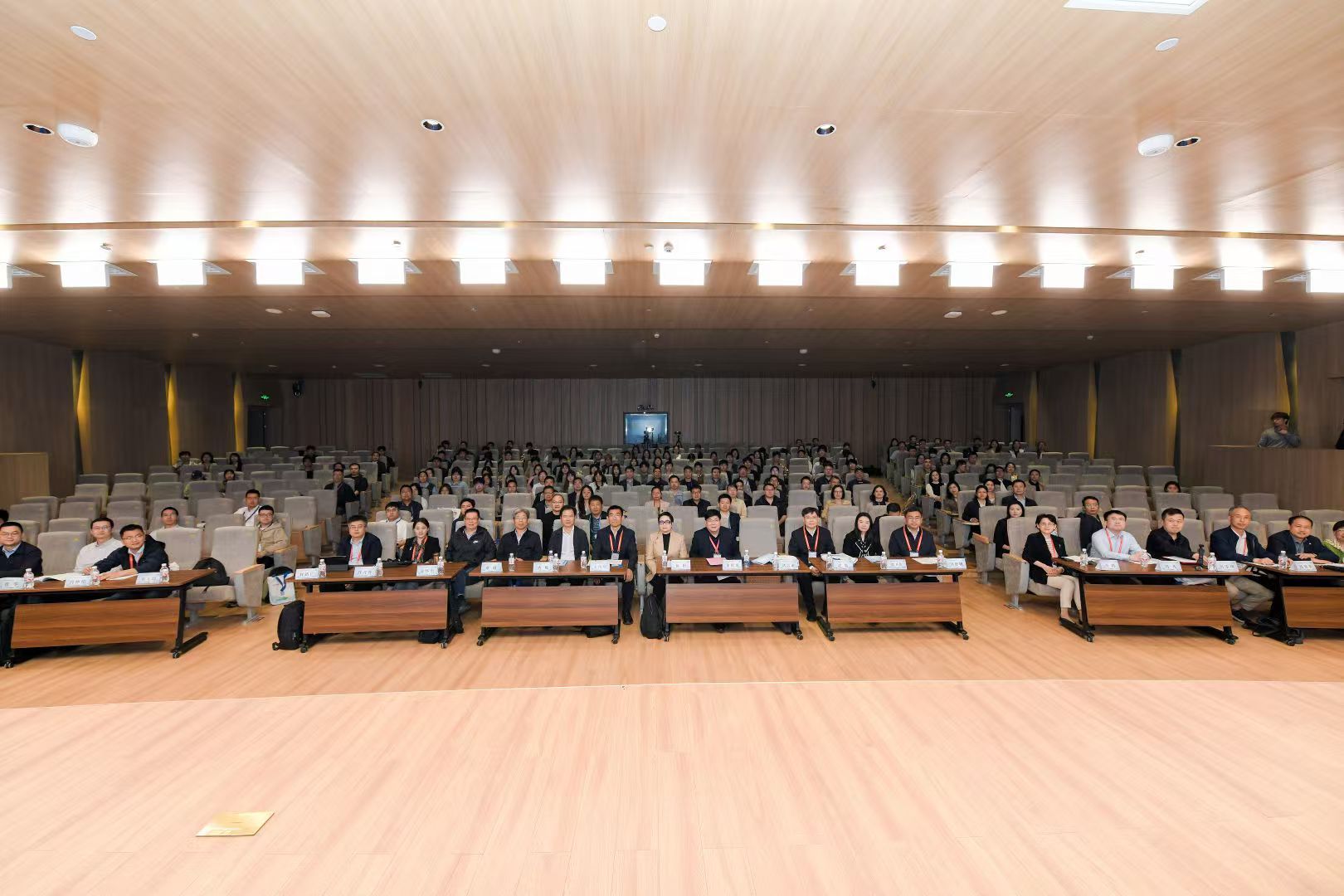
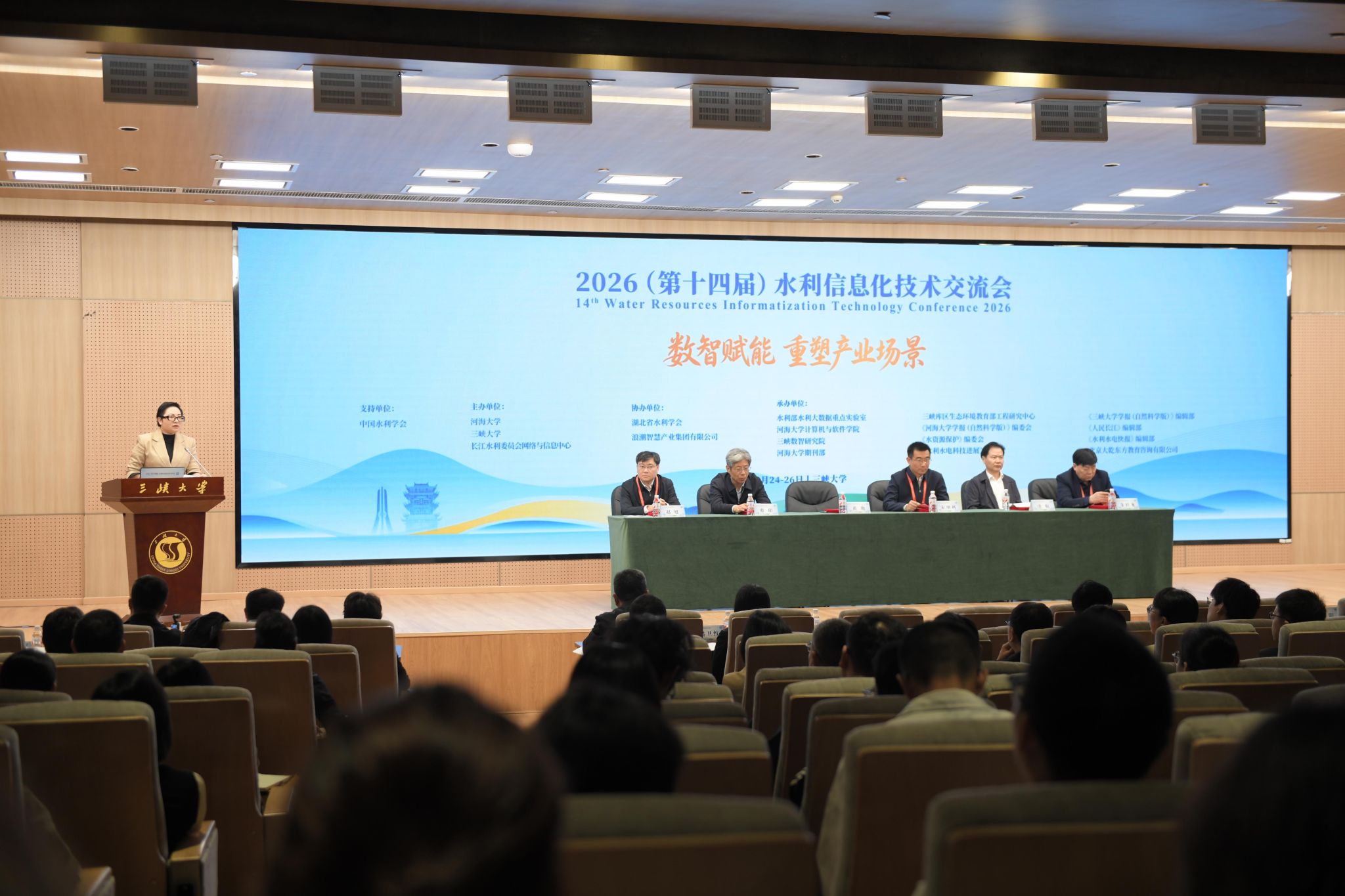
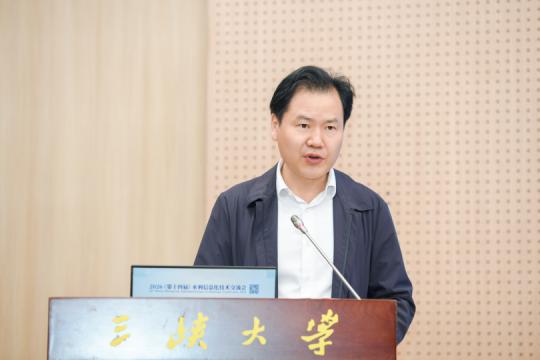
On April 25, the 2026 Water Conservancy Informatization Technology Exchange Conference, the 14th edition of the event, was held in Lecture Hall 2 of the Shengcai Building atChina Three Gorges University(CTGU). The conference was themed “Digital-Intelligence Empowerment and Reshaping Industrial Scenarios.” Huang Yan,President of our university,and Zhao Xu, a member of the Standing Committee of the CTGU Party Committee, attended theconference.
The conference was jointly hosted by Hohai University, China Three Gorges University and the Network and Information Center of the Changjiang Water Resources Commission. Professor Huang Yan, President of CTGU; Professor Song Xiangzhou, Vice President of Hohai University; and Tang Hang, Director of the Network and Information Center of the Changjiang Water Resources Commission, attended and delivered remarks. The opening ceremony was chaired by Zhao Xu. Experts and scholars in attendance included Liu Zhiyu, Director-General of the Department of Hydrology of the Ministry of Water Resources; Zhu Yuelong, former Vice President of Hohai University; Cai Yang, former Director of the Information Center of the Ministry of Water Resources; Kou Huaizhong, former Director of the Information Center of the Yellow River Conservancy Commission; and Professor Xu Yueping of Zhejiang University. Leaders and experts from the Changjiang Water Resources Commission, the Yellow River Conservancy Commission, the China Institute of Water Resources and Hydropower Research, universities and enterprises, as well as editors from water conservancy journals, were also invited to attend.
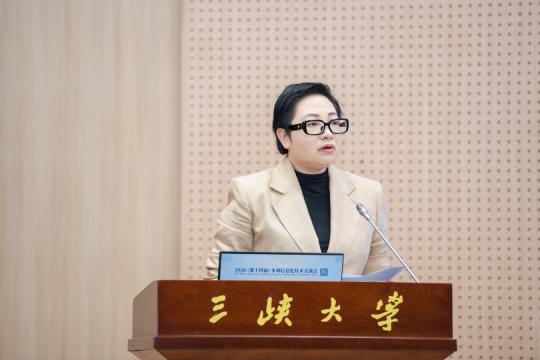
In her remarks, Huang welcomed all guests to CTGU. She said that water conservancy informatization is a core engine driving the modernization of water conservancy, and that the sector is now at a critical stage of transformation marked by digital-intelligence empowerment and scenario reshaping. She introduced CTGU’s distinctive strengths as a university jointly supported by the Ministry of Water Resources and Hubei Province, as well as the progress made in developing the Three Gorges Digital Intelligence Research Institute. She invited all parties to work together on key technologies, cultivate digital-intelligence talent and accelerate the rise of new quality productive forces in water conservancy.
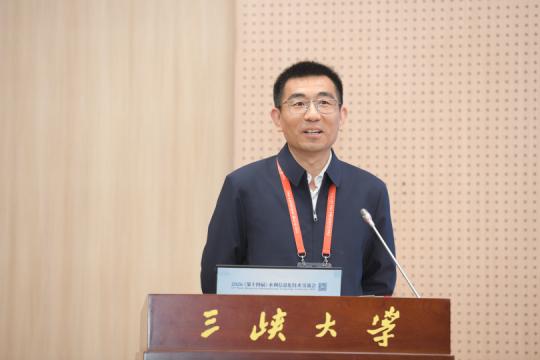
Starting from the long history of water governance and development in China, Song noted thatdigital twin system for water resources managementgives rivers and lakes digital mirrors and equips water conservancy decision-making with an intelligent brain. He proposed that efforts should be made simultaneously in technological innovation, practical application and industry-university-research integration to build a sound ecosystem for collaborative development among government, industry, universities, research institutes and end users, and to jointly write a new chapter in water conservancy informatization.
Tang shared the practical achievements of the Network and Information Center of the Changjiang Water Resources Commission in developing the Digital Twin Yangtze River. The center led the preparation of the top-level design and supported the establishment of key projects such as the Digital Twin Three Gorges. At present, the framework for the Digital Twin Yangtze River has taken initial shape, and participating projects have been selected among the Ministry of Water Resources’ ten demonstration projects. Tang said that buildingdigital twin system for water resources managementsystems is a strategic task for the 15th Five-Year Plan period, and he looked forward to stronger industry-university-research integration to advance water conservancy informatization to a higher level.
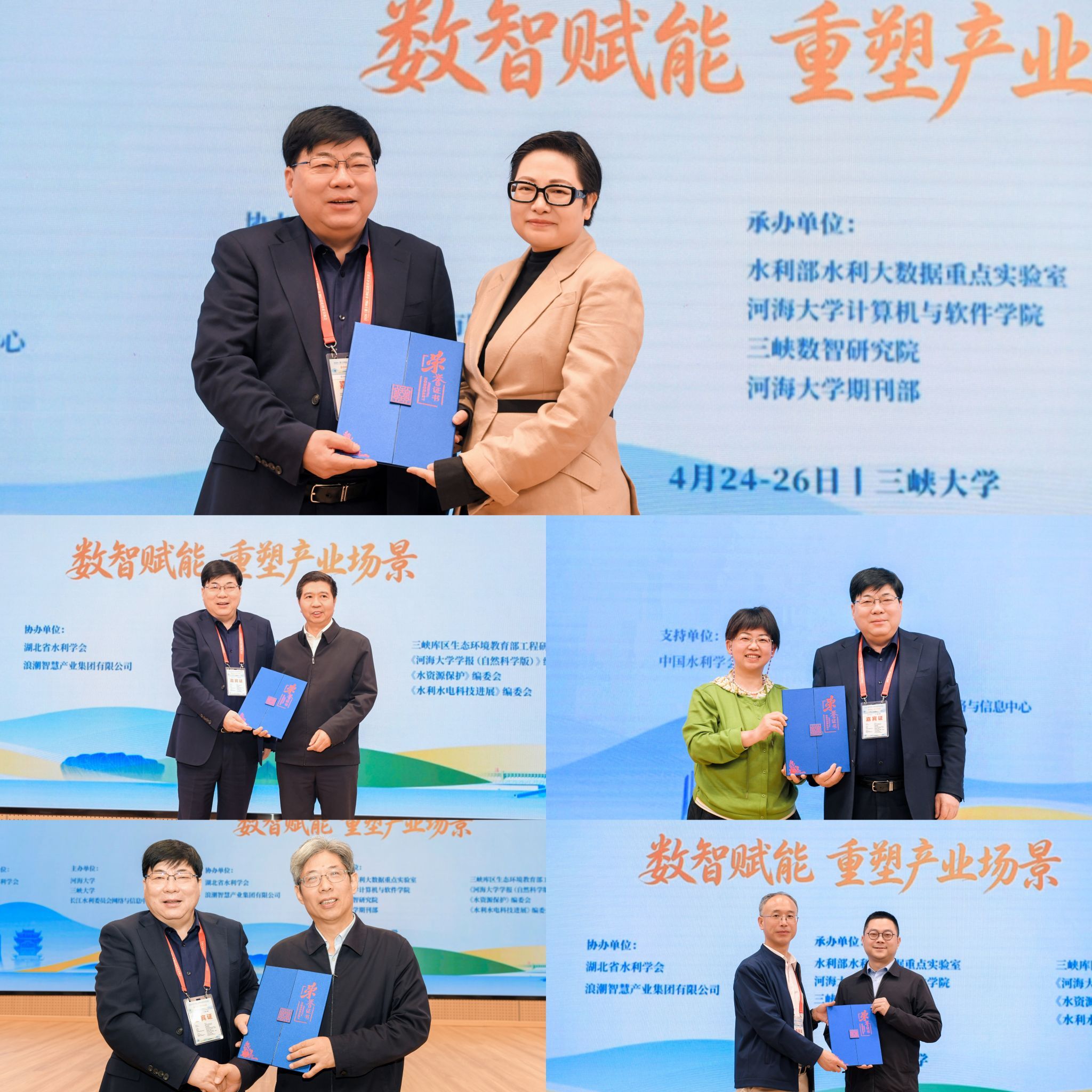
After the opening remarks, Feng Jiangang, Director of the Journal Department of Hohai University, presided over the paper release ceremony and announced the list of award-winning papers. The conference then proceeded to invited and thematic reports, focusing ondigital twin system for water resources managementand artificial intelligence. Experts and scholars held multi-level exchanges, from macro-level planning to engineering implementation, on topics including the development and top-level design of the Digital Twin Yangtze River, integration of large water conservancy models with AI and mechanism-based models, intelligent interpretation of multimodal remote sensing, AI-enabled reservoir forecasting and regulation, and practical applications of digital twin irrigation districts.
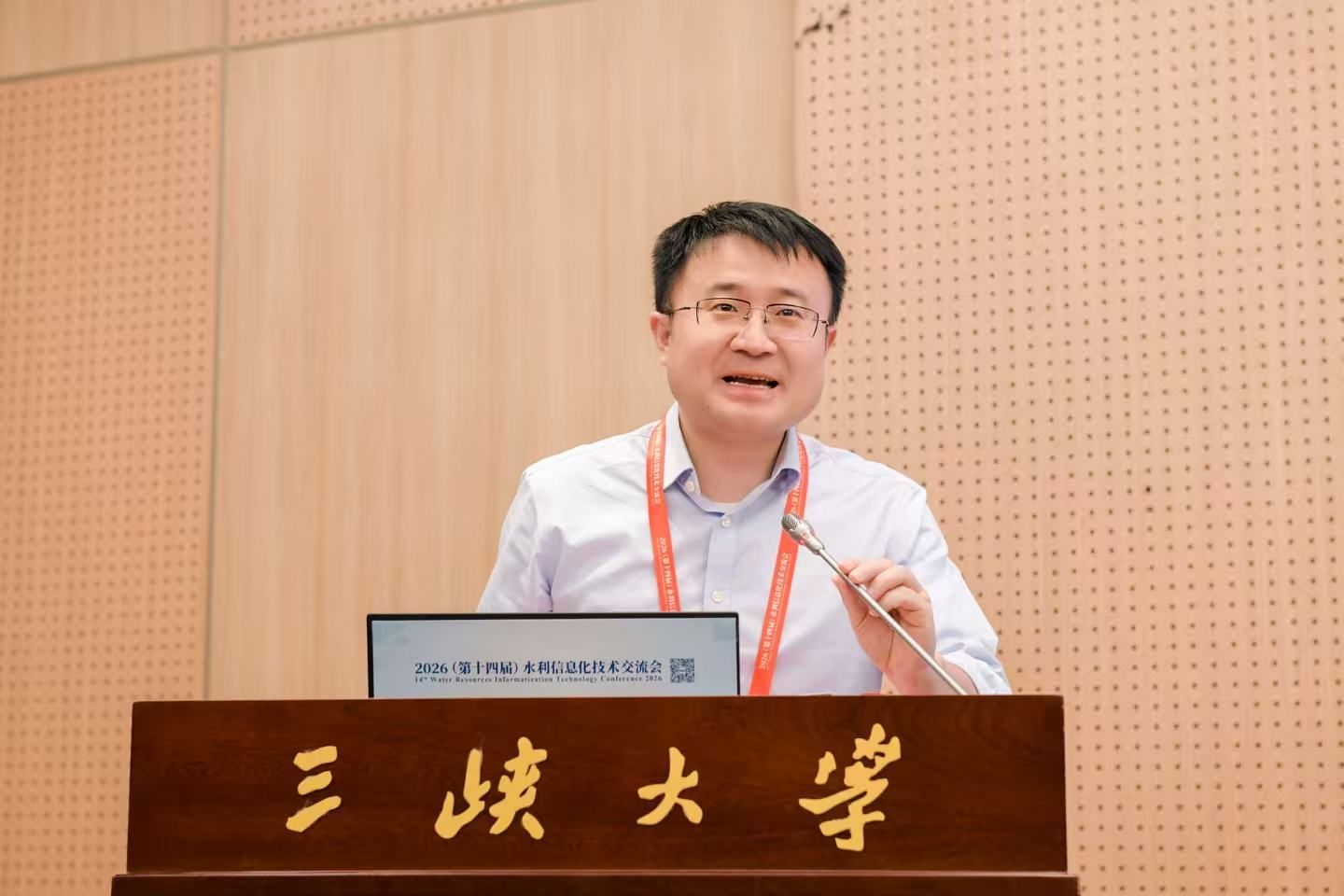
At the conclusion of the conference, Liu Fan, Vice Dean of the College of Computer and Software Engineering of Hohai University, delivered a summary speech. He reviewed the highlights of the conference from seven perspectives: innovation in basic theories and methods, top-level design and system development, key business applications, engineering practice and scenario implementation, sensing and data acquisition, expansion of basic research and methods, and summaries of major engineering practices. He said that the conference conducted full-chain and multi-level discussions on the two core areas ofdigital twin system for water resources managementand artificial intelligence, fully demonstrating new trends and momentum in the development of water conservancy informatization. He expressed the hope that all parties would promote the implementation of more technological achievements in real-world operations.
The conference provided a high-level platform for exchange in the water conservancy informatization sector, strengthened coordination among the organizers, and promoted open sharing and collaborative innovation among industry, universities and research institutions. The in-depth discussions on frontier topics such asdigital twin system for water resources managementand artificial intelligence played an important role in accelerating the development ofdigital twin system for water resources managementsystems and safeguarding national water security.